
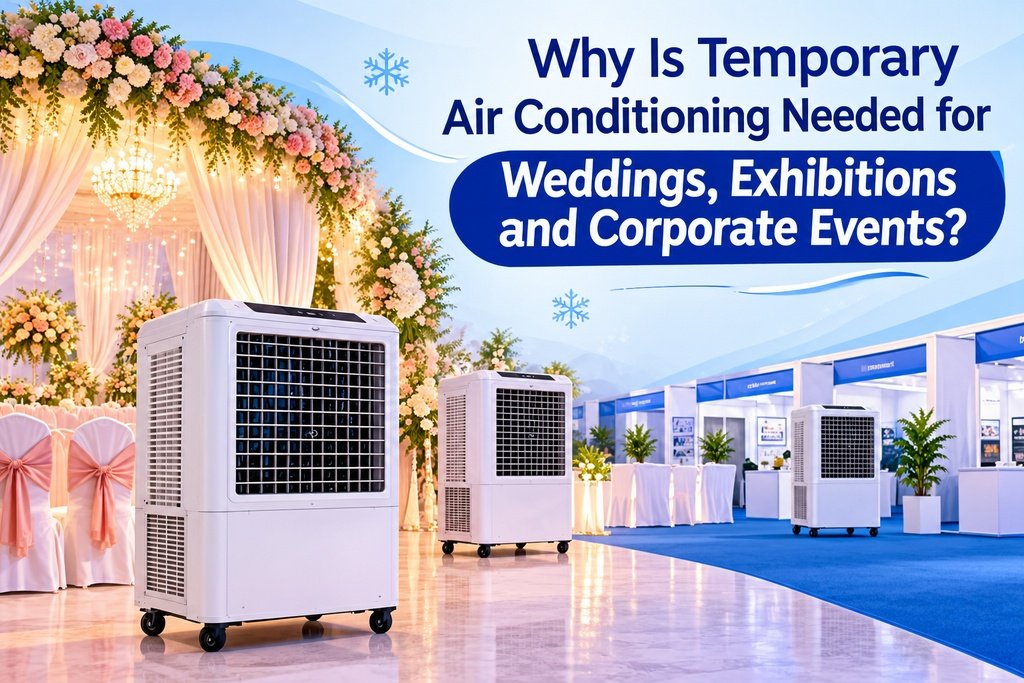
Organising a successful event involves more than choosing a venue, arranging decorations, and managing guests. Indoor comfort is equally important, particularly when weddings, exhibitions, and corporate gatherings take place in large halls, marquees, temporary structures, or outdoor venues. During warm weather, rising temperatures can make these spaces uncomfortable for guests, exhibitors, and staff. This is where temporary air conditioning becomes a practical solution. It provides cooling for a specific period without requiring permanent HVAC installations or major changes to the venue. UAC Tower offers cooling solutions for event organisers who need reliable temperature management for temporary spaces. Whether you are planning a grand wedding, a product exhibition, or a business conference, understanding how temporary air conditioning works can help you create a comfortable environment and ensure your event runs smoothly.
1. What Is Temporary Air Conditioning?
Temporary air conditioning refers to cooling equipment installed for a limited period to maintain comfortable indoor temperatures. Unlike permanent air conditioning systems, these units can be deployed at venues that need additional cooling for a particular event, seasonal requirement, or short-term project.
Temporary cooling is useful in locations such as:
- Wedding marquees and banquet extensions.
- Exhibition halls and trade show venues.
- Corporate event spaces and conference tents.
- Temporary hospitality structures.
- Large halls with insufficient existing cooling.
The equipment required depends on the venue’s size, occupancy, heat load, ventilation, and duration of use. A professional assessment helps determine the appropriate cooling capacity.
2. Why Do Weddings Need Temporary Air Conditioning?
Weddings often involve large gatherings, elaborate lighting, catering arrangements, and extended celebrations. These factors can increase indoor temperatures, particularly in enclosed marquees and temporary structures.
Temporary air conditioning helps maintain a pleasant environment for guests throughout the celebration. It can also improve comfort for elderly attendees, children, and people spending several hours at the venue.
Key benefits include:
- Guest comfort: Helps guests enjoy ceremonies, meals, and celebrations without excessive heat.
- Better event experience: Creates a more pleasant atmosphere for socialising and photography.
- Flexible installation: Provides cooling where permanent systems are unavailable or insufficient.
- Scalable arrangements: Cooling capacity can be planned according to the venue layout and expected attendance.
For example, a summer wedding in a large outdoor marquee may require a different cooling arrangement from a reception held in an established banquet hall. Assessing the venue in advance helps organisers make suitable decisions.
3. Temporary Air Conditioning for Exhibitions and Trade Shows
Exhibitions attract visitors, exhibitors, and staff who may spend several hours inside the same space. Equipment displays, lighting, crowds, and other heat sources can make exhibition areas uncomfortable if cooling is inadequate.
Temporary air conditioning can help event organisers maintain suitable conditions across exhibition halls, temporary pavilions, and product display areas.
Its main advantages include:
- Supporting visitor comfort during busy exhibition hours.
- Helping exhibitors focus on demonstrations and customer interactions.
- Providing additional cooling when existing systems cannot meet demand.
- Accommodating temporary venues with limited permanent infrastructure.
Certain products and displays may also have specific temperature or humidity requirements. In these cases, the cooling arrangement should be designed around the relevant environmental specifications rather than general comfort alone.
4. Why Corporate Events Require Reliable Cooling
Corporate events include conferences, seminars, annual meetings, award ceremonies, product launches, and networking sessions. Poor indoor temperature control can distract attendees and affect their overall experience.
Temporary air conditioning is particularly useful when businesses organise events in rented halls, exhibition centres, temporary conference structures, or venues undergoing renovation.
A suitable cooling setup can help maintain comfortable conditions for attendees, speakers, technical teams, and event staff. It also gives businesses greater flexibility when selecting venues that suit their capacity and branding requirements but lack adequate built-in cooling.
For a corporate product launch, for instance, organisers can arrange temporary cooling for the main presentation area and adjoining guest spaces, subject to a professional site assessment.
5. How to Choose the Right Temporary Air Conditioning System
Selecting cooling equipment involves more than estimating the number of guests. The venue’s physical characteristics and heat sources also influence performance.
Consider these important factors before hiring a system:
Factor | Why It Matters |
Venue size | Helps estimate the required cooling capacity. |
Guest capacity | Occupants contribute to the overall heat load. |
Weather conditions | Outdoor temperatures affect cooling demand. |
Structure and insulation | Marquees and temporary halls may gain heat quickly. |
Equipment and lighting | Additional heat sources increase cooling requirements. |
Installation time | Early planning allows testing before guests arrive. |
Organisers should also confirm electrical supply, ducting requirements, equipment placement, noise levels, maintenance support, and emergency arrangements with the provider.
6. Why Plan Temporary Cooling with UAC Tower?
Every event has different cooling requirements. A wedding marquee, a crowded exhibition, and a corporate conference cannot necessarily use the same equipment configuration.
UAC Tower helps event organisers explore temporary cooling arrangements based on their venue and operational needs. Planning ahead allows the team to assess site conditions, determine suitable equipment, and coordinate installation requirements.
When discussing your event, share the venue dimensions, expected attendance, event dates, operating hours, and details about the structure. These details help establish a practical cooling plan and reduce the risk of last-minute complications.
Booking early is especially useful during peak wedding seasons and periods when exhibitions and corporate events compete for equipment availability.
Conclusion
Temporary air conditioning is an important consideration for weddings, exhibitions, and corporate events, particularly when venues lack sufficient permanent cooling. It helps manage indoor temperatures, improves guest comfort, and allows organisers to use temporary spaces more effectively. Choosing the right solution requires careful assessment of venue size, occupancy, heat sources, and installation conditions. With advance planning and appropriate equipment, event organisers can reduce temperature-related disruptions and create a more comfortable experience. Contact UAC Tower to discuss temporary air conditioning requirements for your upcoming event and identify a cooling arrangement suited to your venue.
Frequently Asked Questions
1. What is temporary air conditioning used for?
Temporary air conditioning provides short-term cooling for venues that lack adequate permanent systems. It is commonly used at weddings, exhibitions, corporate conferences, temporary structures, and other events where comfortable indoor temperatures are essential.
2. Can temporary air conditioning be installed in wedding marquees?
Yes, suitable temporary cooling systems can be arranged for wedding marquees. The appropriate setup depends on the marquee’s dimensions, insulation, occupancy, outdoor temperature, and available power supply. A site assessment helps determine the required capacity.
3. How is the cooling capacity for an event calculated?
Cooling capacity is estimated by considering venue size, guest numbers, outdoor conditions, insulation, lighting, equipment, and ventilation. A professional assessment helps determine the system capacity needed to maintain suitable temperatures throughout the event.
4. Is temporary air conditioning suitable for corporate conferences?
Yes, it can provide additional cooling for conferences, seminars, product launches, and business meetings held in temporary structures or venues with insufficient built-in air conditioning. Proper planning helps minimise disruptions during presentations and networking sessions.
5. When should I book temporary air conditioning for an event?
Booking several weeks in advance is advisable, especially during busy wedding and exhibition seasons. Early arrangements allow time for site assessments, equipment selection, installation planning, and system testing before the event begins.