
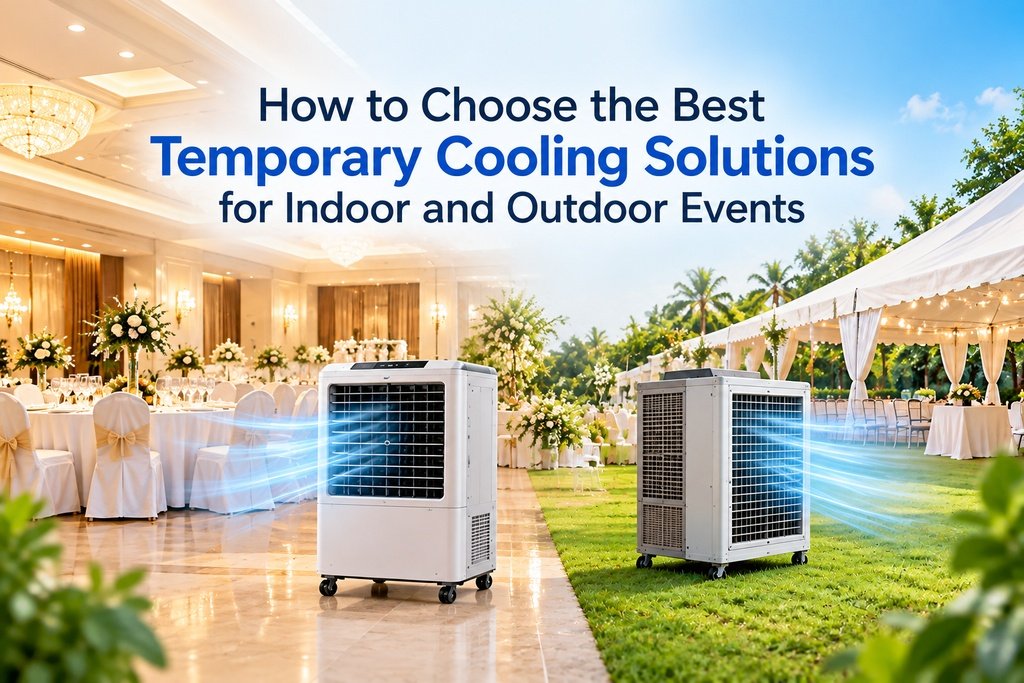
Planning an event during hot or humid weather requires more than selecting a venue and arranging refreshments. Guests need a comfortable environment to enjoy the occasion, whether it is a corporate gathering, wedding, exhibition, private party, or outdoor festival. Choosing the right temporary cooling solutions can help manage indoor temperatures, improve air circulation, and make the event more enjoyable. However, the ideal cooling arrangement depends on several factors, including venue size, guest count, weather conditions, ventilation, and event duration. UAC Tower helps event organisers explore cooling requirements for different temporary setups. Understanding the available equipment and its practical applications can make it easier to select a suitable solution without unnecessary expenses. This guide explains how to evaluate cooling options for indoor and outdoor events and plan an efficient setup.
1. Understand Your Event’s Cooling Requirements
Before hiring cooling equipment, assess the venue and the conditions in which the event will take place. A small indoor conference room has different cooling requirements from a large wedding marquee or an open-air exhibition.
Consider these important factors:
- Venue size: Larger spaces may require multiple units or a more carefully planned cooling arrangement.
- Guest capacity: More people generate additional body heat, particularly in crowded spaces.
- Weather conditions: Temperature, humidity, and direct sunlight influence cooling requirements.
- Event duration: Equipment must operate reliably throughout the planned event.
- Heat sources: Lighting, catering equipment, and electronic displays can increase indoor temperatures.
Sharing these details with a cooling equipment provider helps establish a more suitable setup before installation.
2. Compare Different Temporary Cooling Solutions
Different types of cooling equipment serve different purposes. Understanding their capabilities can help you avoid choosing a system that is unsuitable for your venue.
Cooling option | Suitable applications | Key consideration |
Portable air conditioners | Enclosed rooms, temporary offices | Require suitable ventilation and heat exhaust |
Spot coolers | Specific workstations or designated areas | Best for targeted cooling |
Industrial air coolers | Large, well-ventilated spaces | Performance depends on humidity and airflow |
Temporary HVAC systems | Large indoor venues and event structures | Require professional sizing and installation |
Fans and air circulators | Improving air movement | Move air but do not significantly lower its temperature |
For example, a corporate seminar inside an enclosed hall may benefit from portable air conditioning or temporary HVAC equipment. An open-air exhibition may need a different approach, such as strategically positioned air circulators and cooling stations.
3. Choose the Right Cooling Solution for Indoor Events
Indoor venues often provide more control over temperature because doors, windows, and ventilation systems can be managed. However, crowded halls and temporary structures can still become uncomfortable.
For indoor events, evaluate whether the existing air conditioning can handle the additional guests and equipment. If not, supplementary cooling may be necessary.
Check the following before finalising your arrangement:
- Available electrical capacity and power supply.
- Ventilation requirements and heat exhaust arrangements.
- Equipment placement to prevent obstructed walkways.
- Noise levels, especially during presentations or formal gatherings.
- Access for installation, servicing, and removal.
UAC Tower can help event organisers assess their temporary cooling requirements and explore suitable equipment options for the venue.
4. Plan Cooling for Outdoor Events
Outdoor events present different challenges because there may be no enclosed area to retain cooled air. Direct sunlight, changing wind conditions, and high humidity can also affect comfort.
For outdoor weddings, food festivals, sporting events, and exhibitions, consider creating designated cooling zones where guests can take breaks from the heat.
Useful measures include:
- Positioning shaded seating areas away from direct sunlight.
- Using air circulators where suitable to improve airflow.
- Considering evaporative coolers in dry conditions with sufficient ventilation.
- Providing enclosed, air-conditioned spaces where practical.
- Keeping equipment protected from rain and unauthorised access.
Remember that portable air conditioners generally need an appropriate enclosed space and a way to discharge hot air. They are not automatically effective in open areas.
5. Consider Energy Efficiency, Safety, and Installation
The lowest rental price does not always represent the best value. Equipment that is incorrectly sized or positioned may consume unnecessary energy without maintaining comfortable conditions.
Ask the supplier about power consumption, expected operating requirements, maintenance support, and backup arrangements. Confirm that electrical connections, cables, and distribution equipment are suitable for the installation.
Safety is particularly important at busy events. Keep cables secured, maintain clear emergency exits, and ensure equipment does not obstruct guests or staff. Outdoor installations should also account for weather exposure and stable positioning.
Discuss delivery, setup, testing, operating instructions, and removal before confirming your booking.
6. Create a Practical Cooling Budget
A realistic budget should include more than equipment rental. Depending on the arrangement, additional costs may include transportation, installation, electricity, ducting, accessories, and technical support.
To compare quotations effectively, request itemised pricing and check what each package includes. Confirm the number of operating hours, service availability, and charges for additional equipment.
UAC Tower can be approached to discuss event-specific requirements and determine which cooling arrangements may suit your venue, schedule, and budget.
Conclusion
Choosing the right temporary cooling solutions starts with understanding your venue, guest capacity, weather conditions, and event duration. Indoor halls may require portable air conditioning or temporary HVAC systems, while outdoor gatherings often benefit from shaded areas, targeted cooling zones, and improved airflow. Consider energy use, safety, installation requirements, and overall rental costs before making a decision. With proper planning and suitable equipment, UAC Tower can help event organisers work towards a more comfortable environment for their guests.
Planning an upcoming event? Contact UAC Tower to discuss your venue, cooling requirements, and available equipment options before finalising your arrangements.
Frequently Asked Questions
1. What are temporary cooling solutions?
Temporary cooling solutions are portable or rental-based systems used to manage heat at events, temporary workplaces, exhibitions, and other venues. Options include portable air conditioners, spot coolers, industrial air coolers, and temporary HVAC equipment.
2. Which cooling equipment is best for outdoor events?
The best option depends on weather, humidity, venue layout, and available shelter. Shaded cooling zones, air circulators, and evaporative coolers may help in suitable conditions. Enclosed, air-conditioned spaces can provide more controlled cooling.
3. How do I calculate the cooling capacity required for an event?
Cooling requirements depend on floor area, ceiling height, guest numbers, sunlight, lighting, equipment, and ventilation. Ask a qualified supplier to assess these factors rather than selecting equipment based on floor area alone.
4. Are portable air conditioners suitable for temporary indoor venues?
Yes, portable air conditioners can work well in suitable enclosed spaces. They generally require a suitable exhaust arrangement to release hot air and sufficient electrical capacity to operate safely and effectively.
5. How far in advance should I arrange temporary cooling equipment?
Booking several weeks ahead is a practical approach for large events and busy festive periods. Early planning provides more time to assess the venue, confirm equipment availability, arrange installation, and organise backup support.